
It’s time for
a new Mayor.
Launceston needs a new Mayor. We need someone who respects the position, understands the detail, and can steady the ship.
I bring eight years of Council experience, fighting to improve governance, reduce waste and demand accountability. As a former political adviser and ABC journalist, I have spent my career holding power to account. Give the job to someone who treats every dollar as your money, avoids debt and cost blowouts, and includes the community in decisions.
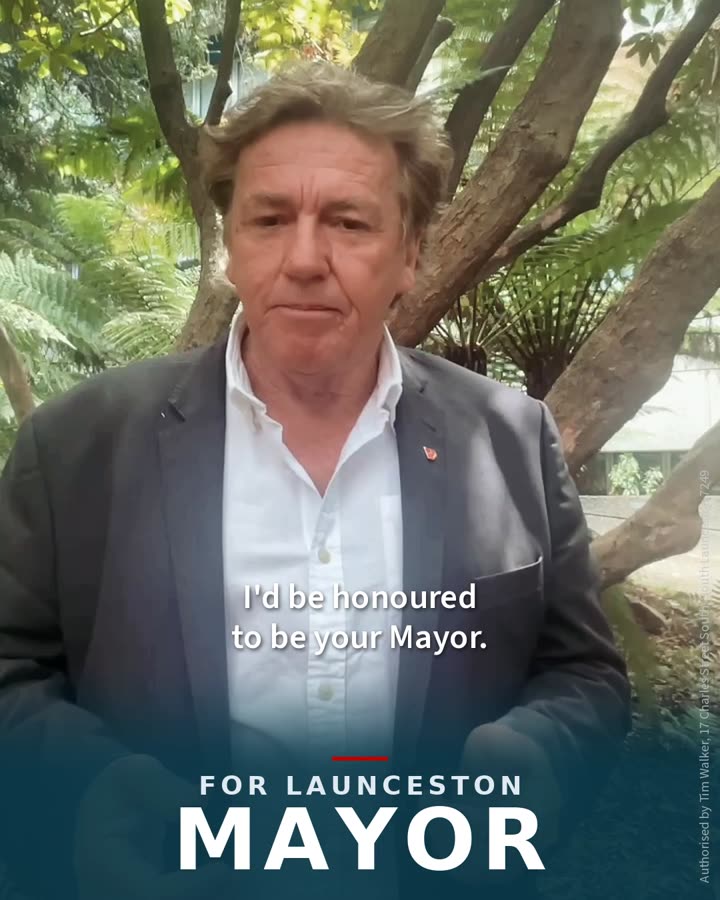
About Tim
Tim Walker was elected to Launceston City Council in 2018 and has served for eight years.
Tim has called Launceston home for more than 40 years. After studying at UTAS in Newnham, he built a varied career here: as a journalist at ABC Northern Tasmania, as an adviser to a Tasmanian Senator, in education, in student unions, and in disability services. He also spent 10 years owning a small retail business in the city.
At a glance
- Launceston City Councillor, eight years
- Former ABC journalist
- Former political adviser
- Always independent
Committees
- Chair, Cultural Advisory Committee
- Chair, Homelessness Advisory Committee
- Audit Panel
- CEO Performance Review Committee
Every decision of this term from Council’s official minutes, searchable by topic, Councillor or year – including every split vote and who was on each side.
Search the recordWhat the job actually involves, what a Councillor can and cannot decide, and how to raise something with Tim.
How Council worksWhen voting opens and closes, what you are voting for, and why the order you number the boxes decides the result.
How voting worksWhat does your suburb need?
Pick your suburb and tell me what matters to you. The icons are some of my ideas – tap one to have your say.
Your area
Choose a suburb
Tap a suburb on the map, or pick one from the list.
Start the discussion ·
- Needs
- Details
- Contact
Suburb boundaries: Australian Bureau of Statistics, Suburbs and Localities 2021 (CC BY 4.0).
Rates and the plans behind them
Simple guides to the three documents that decide what Council charges you and what it spends it on.
Helping you understand your rates
Your rates, explained simply
Rates pay for many of the services we all use, from roads and parks to rubbish collection and public facilities. Here’s how they work and where the money goes.
20% cap on rate rises. The 2026/27 budget, adopted in June, raised the general rate sharply for some property types, including a rise of almost 40% for primary production. On 3 September 2026, Council voted to cap the general rate increase at 20% for every property type, except where the rise comes from a change to the property’s own valuation. The figures on this page are from the budget as adopted, before the cap.
What’s on a home rates notice
A rates notice for a home is made up of five parts. Tap each one to see what it is. This example is for homes only: businesses, farms, vacant land and other properties pay a different general rate.
What is AAV?
AAV stands for Assessed Annual Value. It’s roughly how much rent your property could earn in a year. It’s set by the state’s Office of the Valuer-General, not by Council, and you’ll find it on your rates notice.
Two parts of your rates use it: the general rate and the fire levy. The higher your AAV, the more you pay.
Where the money goes
For every $100 Council plans to spend in 2026/27, this is roughly where it goes. It includes day-to-day services and building projects, paid for by rates, fees, grants and other income together. Tap an area to see what it covers.
Who’s paying more this year
Council sets a different rate for each type of property. This year the residential rate went down slightly, while the rate for vacant land, farms and industry went up sharply. Everyone also pays the higher $380 fixed charge.
On 3 September 2026 Council capped the general rate increase at 20% for every property type, except where the rise comes from a change to the property’s own valuation. The cap is still being applied, so the figures below don’t reflect it yet.
Tap a property type to see what the change means. Rates are in cents for every dollar of AAV. How much an individual bill changes also depends on that property’s valuation.
Tap a property type to see what the change means. Rates are in cents for every dollar of AAV. How much an individual bill changes also depends on that property’s valuation.
Where these figures come from
All figures are from the City of Launceston Annual Plan and Budget 2026/2027 (Valuation and Rating Details, and Expenditure Summary). For more about rates, see Council’s Rates information and its guide How to read your rates notice.
Keep exploring
Helping you understand the money
The Long Term Financial Plan, explained
What Council expects to earn, spend and borrow over the next ten years, and what it means for rates.
Helping you understand the 10-year plan
The Strategic Plan, explained
What’s in Council’s Strategic Plan 2025–2035, the targets it sets, and the big projects it names.
Six questions, in Tim’s own words
Hear from Tim
Short answers on why Launceston needs a new Mayor, borrowing, public forums and more.
Helping you understand the 10-year plan
Launceston’s 10-year strategic plan
Council’s roadmap for 2025–2035, adopted in June 2025.
Launceston by the numbers
These figures come from the “Setting the scene” section of Council’s Strategic Plan 2025–2035, which Council used to shape the plan. Population figures are Council’s 2024 estimate and 2034 projection, and the homelessness figures compare 2016 with 2021.
Highlights from the 10-year plan
Three pillars, each with three goals. Choose a pillar, then open a goal.
The plan’s key targets
Big-ticket projects: what’s the cost?
Every major project named in the plan. Apart from the Princess Theatre work already underway, the plan sets no cost, no funding source and no staging for any of them. Those decisions sit in the Long Term Financial Plan, which commits Council to total liabilities of over $100 million over the decade, with debt peaking at $78 million owed in 2030/31. Council had cleared its debt by 2024/25. See the financial plan.
Tim’s view
This plan names ten major projects, but no costing for them, so this can be viewed as a council ‘wish list’. Some of these things have diminished in relevance, and others will likely never proceed, so an update is required once a new council is formed. Amongst all of these, the NTCA redevelopment stands out as doing more for future proofing Launceston than anything else. Launceston needs to temper some of this ambition with a healthy dose of pragmatism if we are to create the economic drivers for our future. Of course, as a strategic document, nothing here tells you which will come first, what they cost, or what we may have to give up to have them. That conversation needs to happen with the community, with Council leading an agile response to changing economic circumstances, and long before any of the borrowing is committed to.
Council debt, past and planned
Council cleared its loans by 2024/25, and none are budgeted this year. That is where most reporting stops. The red bars are Council’s own forecast in the Long Term Financial Plan: This new borrowing over the coming decade is to pay for the capital works and renewal program, with debt peaking at $78 million owed in 2030/31. See the financial plan.
Tim’s view
Council saw a rise in debt during the council rate freeze and other responses during the covid pandemic, and immediately after that with interest free loans from the State Government connected to a potential bus interchange. Repaying these, and bringing council back to surplus was the right thing to do. What concerns me is what comes next. The financial plan turns that clean balance sheet into tens of millions of new borrowing, most of it for civic works that will not directly grow our economy. Debt is either good or bad, depending upon how it pays its way. At a time when Northern Tasmania needs economic stimulus, not expensive civic works, we must focus primarily upon attracting new investment.
Where these figures come from
From the City of Launceston Strategic Plan 2025–2035 and the Annual Plan and Budget 2026/2027. The forecast debt figures are from the Long Term Financial Plan 2026–2036, adopted on 3 September 2026 and not yet published on Council’s website. It is attachment 19.4.1 in the agenda attachments (203MB PDF), with the decision in the minutes of that meeting.
Keep exploring
Helping you understand the money
The Long Term Financial Plan, explained
What Council expects to earn, spend and borrow over the next ten years, and what it means for rates.
Helping you understand your rates
Your rates, explained
What’s on a rates notice, where the money goes, and who’s paying more this year.
Tim’s approach
How Tim would lead
Public forums, the CBD, housing, the budget and more: what Tim would do as Mayor.
Helping you understand your Council
What does a Councillor do?
Councillors make the decisions that shape Launceston. Here’s how Tim can use that role to help you.
How decisions are made at Council
No one person decides anything at Council. Not the Mayor, not the Deputy Mayor, and no single Councillor. Decisions are voted on by the Councillors at a public meeting, and each of them has exactly one vote.
The Mayor chairs the meeting and represents the city, but at the table the Mayor’s vote counts exactly the same as everyone else’s. For most decisions a majority is needed for something to pass – five votes when all nine are there.
Council officers research each item and recommend what Council should do, with the documents set out in the meeting agenda. But officers don’t decide. Councillors vote, and they can vote against a recommendation.
Every meeting is open to the public and streamed live on YouTube, and every vote is recorded in the minutes.
See how a decision is made
Some may be away that day, or unable to vote because they have a conflict of interest.
How an idea becomes a Council decision
Any Councillor can put forward a motion. Here’s how an idea, whether it comes from a Councillor or from someone in the community, becomes a decision of Council.
How a Councillor can help you
Good to know
Councillors can’t direct Council staff – that’s the CEO’s job – but they can raise issues, ask questions and put forward motions.
Worried about a development?
Council is also Launceston’s planning authority, deciding development applications using the rules in the Tasmanian Planning Scheme. Here’s how the process works, and where Councillors fit in.
What a Councillor can and cannot promise
By law, Councillors must decide each application on its planning merits and keep an open mind until the meeting, so no Councillor can promise you how they will vote. What they can do is listen. Hearing from the people nearby helps a Councillor understand the local impact and ask the right questions at the meeting.
Want to talk to me about a development?
If a development application affects you, I want to understand how before it comes to a vote. Tell me what you think and why.
You don’t need to know the planning rules. Just tell me what it would mean for you, your street or your business, whether you support it or not. If you’d rather have a chat on the phone, call me on 0429 137 084.
- Your view
- Contact
Helpful links
Keep exploring
Council’s record
How Council voted
Every Council decision this term, from the official minutes. Search any issue.
Tim’s approach
How Tim would lead
Public forums, the CBD, housing, the budget and more: what Tim would do as Mayor.
Voting closes 2 pm, 27 October
Election guide
How to vote, how preferences work, and the key dates for this election.
Council’s record
How Council voted
Every decision from Council’s official minutes this term, November 2022 to October 2026. Search it, pick a Councillor, or look at the split votes where Councillors disagreed.
Extracted from the City of Launceston’s published minutes. Motion wording is taken from the minutes in full, except where marked “extract”, which means it was too long to show here. Each item links to the official minutes. Items marked ⚠ are shown exactly as recorded, but something in the minutes themselves doesn’t add up, such as a heading that doesn’t match the motion, or a tally that doesn’t match the names listed. The note on each item explains. Where a Councillor abstained, they are shown separately, but an abstention counts towards the tally as a vote against. Motion wording is shown exactly as recorded in Council’s minutes, including any spelling errors. Recording links open the City of Launceston’s own meeting recordings on YouTube, at the point Council began the item. Times are matched from the recording and may be a few seconds out.
Disclaimer: This record is compiled and published by Tim Walker’s campaign. It is not a City of Launceston publication and Council has no involvement in it. Council’s published minutes are the official record: where anything here differs from them, the minutes are correct. Descriptions such as “split vote”, “routine” and “Notice of Motion” are our summaries of what the minutes record, not Council’s own terms, and the vote tallies shown are as recorded in the minutes. The record covers Council meetings from November 2022 to October 2026. Items dealt with in closed session are listed, but without the motion or vote, because Council keeps these confidential. Every item has been checked against the minutes, but if you believe something is wrong, please get in touch and it will be checked again and corrected. Motion wording is extracted from Council’s published minutes, which remain the copyright of the City of Launceston, and is reproduced here for public information about how Council voted.
Keep exploring
Six questions, in Tim’s own words
Hear from Tim
Short answers on why Launceston needs a new Mayor, borrowing, public forums and more.
Tim’s approach
How Tim would lead
Public forums, the CBD, housing, the budget and more: what Tim would do as Mayor.
Your Council
What a Councillor does
What Councillors decide, what they don’t, and how Council works.
Helping you understand
this election
Understanding this election
When voting opens and closes, what you are actually voting for, and why the order you number the boxes decides who wins.
Who you’re choosing
Three separate ballot papers arrive by post, with a candidate summary booklet.
To become Mayor or Deputy Mayor, a candidate must also win a Councillor seat. Tim is standing for Mayor and Councillor.
What’s changing this election
Launceston is moving from 12 Councillors to 9. Amendments to the Local Government Act 1993 cut the number of Councillors across Tasmania by 50 from this election, leaving nine for Launceston, Hobart, Clarence, Glenorchy and Kingborough, and seven everywhere else. With fewer seats, each vote counts for more, and a majority at the table becomes five instead of seven. Read the TEC’s explanation.
Why your preferences matter
The Mayor needs more than half of the votes still in the count. If no one has that on first preferences, the candidate with the fewest votes is knocked out and their votes move to each voter’s next choice. But if a voter didn’t number a next choice, their vote stops there. That vote is exhausted, and has no say in who wins.
Example count:
8 candidates, 40,000 votes
Made-up candidates and numbers, for illustration only. Around 40,000 people voted in each of Launceston’s last two mayoral elections. The share of exhausted votes is based on Launceston’s 2023 mayoral by-election, where around 1 in 20 votes had dropped out by the final count. With eight candidates this time, there are more rounds, so it’s likely to be a little higher. The dashed line shows half of the votes still counting.
Keep exploring
Six questions, in Tim’s own words
Hear from Tim
Short answers on why Launceston needs a new Mayor, borrowing, public forums and more.
Tim’s approach
How Tim would lead
Public forums, the CBD, housing, the budget and more: what Tim would do as Mayor.
Council’s record
How Council voted
Every Council decision this term, from the official minutes. Search any issue.
Helping you understand the money behind the plan
Council’s 10-year long term financial plan
Tim’s view
Why I voted against this plan
While I respect the work done to put Council on a stable footing, it commits us to millions of new borrowings, mostly for civic works and renewal, that will not grow our economy at a financially challenging time. I voted against it not because we don’t need a plan, but because building our economy has to become a central focus of council visioning. The plan places us all in a challenging position of how we pay for unmet targets, unexpected changes or poor project oversight. The one thing we do know is who will pay.
Broadening the rate base by attracting investment to the region has to predicate any notion that the CBD will grow, that jobs will grow, or that more people will choose to live in Launceston. Currently, the planned debt will peak at $78 million owed in 2030/31, predicated upon civic works such as a $30 million bus interchange, finishing the Princess Theatre, remodelling the NTCA ground, and continuing the City Heart program. Staging some of these, and seeking affordable alternatives, allows Launceston to invest further in attracting new investment, especially in the things we do best; our gastronomy economy, tourism, agriculture and adventure, to help build a vibrant regional economy.
What is a Long Term Financial Plan?
Does Council have to have one?
Yes. Section 70 of the Local Government Act 1993 requires every Tasmanian council to have a long-term financial management plan covering at least ten years.
Is it a budget?
No. No money is spent because of it, and each year’s spending is still decided in that year’s Annual Plan and Budget.
So what does it do?
It sets the path: what Council expects to earn, spend, build and borrow, and whether what it wants to build can be paid for.
When was this one adopted?
On 3 September 2026, as item 19.4, carried 8 votes to 2. It runs from 2026/27 to 2035/36.
The plan in numbers
The figures that shape the decade. All are Council’s own, taken from the adopted plan.
The next ten years
Council’s own forecasts, year by year.
What Council plans to build
$575 million of capital works over ten years, by type of asset.
What the plan assumes
The forecasts above only hold if these assumptions hold.
Risks that the plan identifies
Council lists these as the main risks to its financial position.
Tim’s view
The risks identified in the plan can only be based upon previous financial indicators. The future cost of borrowing is something no one can predict, but will leave Launceston vulnerable to world economic trends. The plan assumes debt stays affordable for ten years. If interest rates rise, or project costs continue to blow out as they have recently, the impact to debt compounds rapidly. Add to this a recessionary environment for ratepayers and the effects upon rate rises, or other revenue raising methods, become a serious concern.
Where these figures come from
City of Launceston Long Term Financial Plan 2026–2036, adopted at the Council meeting of 3 September 2026, item 19.4. It is not yet published on Council’s website: the adopted version is attachment 19.4.1 in the agenda attachments (203MB PDF), and the decision is in the minutes (3MB PDF).
Keep exploring
Helping you understand your rates
Your rates, explained
What’s on a rates notice, where the money goes, and who’s paying more this year.
Council’s record
How Council voted
Every Council decision this term, from the official minutes. Search any issue.
Six questions, in Tim’s own words
Hear from Tim
Short answers on why Launceston needs a new Mayor, borrowing, public forums and more.
Hear from Tim
Six questions.Straight answers.
Pick a question to hear Tim answer it, in his own words.
Keep exploring
Tim’s approach
How Tim would lead
Public forums, the CBD, housing, the budget and more: what Tim would do as Mayor.
Council’s record
How Council voted
Every Council decision this term, from the official minutes. Search any issue.
Helping you understand the money
The Long Term Financial Plan, explained
What Council expects to earn, spend and borrow over the next ten years, and what it means for rates.
Tim as Mayor
A steady hand for Launceston
Eight years on Council, a career spent understanding how government and the media work, and one clear goal: a Council that works well together and gets the job done.
Eight years that count
A Mayor has to lead from the very first meeting. Tim already knows how Council works, inside and out.

Knows how Council works
Eight years at the table: the budgets, the rates, the planning rules and the long-term plans. No learning curve on day one.
Tested on the big decisions
Two terms of votes on everything from major projects to rates, with every one of them on the public record.
Committee experience
Years of committee work, including chairing the Cultural Advisory and Homelessness Advisory Committees, and serving on the Audit Panel and CEO Performance Review Committee.
Trusted to represent
Two terms representing residents and businesses, raising their concerns at the table and following them through.
How Tim would lead
Six principles Tim would bring to the Mayor’s chair.
In practice
- Share civic events and representation with the Deputy Mayor and Councillors
- Keep every Councillor fully briefed
- Share the credit for what Council achieves together
In practice
- Understand every agenda, report and attachment
- Prepared to ask the right questions
- Always focused on the long term interests of the city
In practice
- Official updates through Council’s proper channels
- Clear explanations of big decisions
- Respectful engagement, with debate kept at the table
In practice
- Avoid cost blowouts and unnecessary debt
- Value for money on every project
- No wasteful spending of ratepayers’ money
In practice
- Build strong working relationships with State and Federal governments
- Negotiate for funding and fair outcomes for Launceston
- Work with neighbouring councils, business and community groups
In practice
- An open door for residents and businesses
- Hear from the community before big decisions
- Present and approachable across the region
A career that prepared him for the role
Every part of Tim’s working life has built skills a Mayor needs. Choose a role to see what it brings.
Elected in 2018 and re-elected in 2022, Tim has served on Council for eight years as an independent.
What it brings to the Mayor’s roleKnows the organisation, the budget and the rules, and is ready to lead from the first meeting.
Tim worked as an adviser to a Tasmanian Senator, understanding how federal governments make decisions.
What it brings to the Mayor’s roleKnows how State and Federal governments work, and how to make Launceston’s case for funding and support.
Tim worked as a journalist at ABC Northern Tasmania, reporting on the region and its issues.
What it brings to the Mayor’s roleMedia know-how. A Mayor speaks for the whole city, and Tim knows how to communicate clearly, accurately and calmly.
Tim has worked in education, student unions and disability services.
What it brings to the Mayor’s roleUnderstands the people and services a city relies on, and what good representation looks like.
Tim owned and ran a small retail business in Launceston for ten years.
What it brings to the Mayor’s roleKnows first-hand what local businesses need from Council, and what every dollar is worth.
Tim studied at the University of Tasmania in Newnham and holds a Bachelor of Arts in Humanities, majoring in philosophy, history and English. He has called Launceston home for more than 40 years.
What it brings to the Mayor’s roleCritical thinking, clear writing and a sense of history, grounded in more than 40 years as part of the Launceston community.
Launceston City Councillor
Since 2018
Elected in 2018 and re-elected in 2022, Tim has served on Council for eight years as an independent.
Knows the organisation, the budget and the rules, and is ready to lead from the first meeting.
Political adviser
Tasmanian Senator
Tim worked as an adviser to a Tasmanian Senator, understanding how federal governments make decisions.
Knows how State and Federal governments work, and how to make Launceston’s case for funding and support.
Journalist
ABC Northern Tasmania
Tim worked as a journalist at ABC Northern Tasmania, reporting on the region and its issues.
Media know-how. A Mayor speaks for the whole city, and Tim knows how to communicate clearly, accurately and calmly.
Community roles
Education, student unions, disability services
Tim has worked in education, student unions and disability services.
Understands the people and services a city relies on, and what good representation looks like.
Small business owner
10 years in the city
Tim owned and ran a small retail business in Launceston for ten years.
Knows first-hand what local businesses need from Council, and what every dollar is worth.
Studied at UTAS
Newnham
Tim studied at the University of Tasmania in Newnham and holds a Bachelor of Arts in Humanities, majoring in philosophy, history and English. He has called Launceston home for more than 40 years.
Critical thinking, clear writing and a sense of history, grounded in more than 40 years as part of the Launceston community.
The Mayor’s role, done well
What a Mayor actually does, and how Tim would approach each part of the job.
Chairing meetings
The role
The Mayor chairs Council meetings and sets the tone for how they run. The chair keeps debate orderly, applies the meeting rules fairly and makes sure the business gets done. At the table, the Mayor’s vote counts the same as every other Councillor’s.
How Tim would do it
Run fair, focused meetings where every Councillor is heard and decisions are made on the merits. Tim would make sure reports are properly considered and questions are welcomed. Respectful debate, a clear decision, then on to the next item.
Speaking for the city
The role
The Mayor is Council’s official spokesperson and the public face of Launceston. When Council makes a decision, it is usually the Mayor who explains it to the media and the community.
How Tim would do it
Speak for the whole Council: clearly, accurately and through the proper channels. As a former ABC journalist, Tim knows how to explain decisions in plain terms, stick to the facts and keep debate at the Council table.
Working with governments
The role
Many of the things Launceston needs, from roads and housing to health services and major projects, depend on funding and decisions from the State and Federal governments. The Mayor leads the city’s case with Ministers, MPs and their departments.
How Tim would do it
Tim knows how government works from the inside, having worked as an adviser to a Tasmanian Senator. He would build constructive relationships across all parties, be well prepared with the facts, and negotiate for the funding and outcomes Launceston needs. Firm when it matters, always professional.
Representing Launceston
The role
The Mayor represents the city at civic events and ceremonies, and with businesses, visitors and community groups.
How Tim would do it
Be present and approachable across the whole city. Tim would share events and representation with the Deputy Mayor and Councillors, so the whole team is visible in the community and more people get to meet their Councillors.
Working with the CEO
The role
Councillors set the direction and make the decisions. The CEO and staff give advice and deliver the work. The Mayor is the main link between the two.
How Tim would do it
Respect those roles, set clear priorities and hold the organisation to account for delivering them. Tim’s time on the CEO Performance Review Committee means he understands how that relationship works, and how to keep it professional and focused on results.
Leading the Council
The role
The Mayor helps nine independently elected Councillors work together as one team, even when they disagree.
How Tim would do it
Bring people together, find common ground and keep everyone focused on what’s best for the city. Tim would make sure every Councillor is briefed, heard and given the chance to contribute, and that credit for Council’s achievements is shared.
PUBLIC FORUMS
Council doesn’t hold public forums.
Let’s change that.
Tim would seek Council approval to conduct regular, open public forums, so residents can hear from industry experts and Council officers, as well as have a real say on the big issues facing Launceston, before those decisions are made.
A Council that quietly gets on with the job
Good Councils don’t need headlines. They do the work, together, and let the results speak for themselves. That’s the Council Tim wants to lead.
Focused on delivery
Meetings that stay on the agenda, and decisions followed through to real results for the city.
One clear voice
Council’s decisions explained clearly, calmly and accurately, through its official channels.
Shared success
Achievements that belong to the whole Council, the staff who deliver them and the community.
Open and transparent
Clear information about what Council is doing, including when things don’t go to plan.
Nine Councillors, one team. Every Councillor is elected to represent Launceston. Tim’s job as Mayor would be to help all nine work well together, whatever their views.
Keep exploring
Six questions, in Tim’s own words
Hear from Tim
Short answers on why Launceston needs a new Mayor, borrowing, public forums and more.
Council’s record
How Council voted
Every Council decision this term, from the official minutes. Search any issue.
Helping you understand the money
The Long Term Financial Plan, explained
What Council expects to earn, spend and borrow over the next ten years, and what it means for rates.